
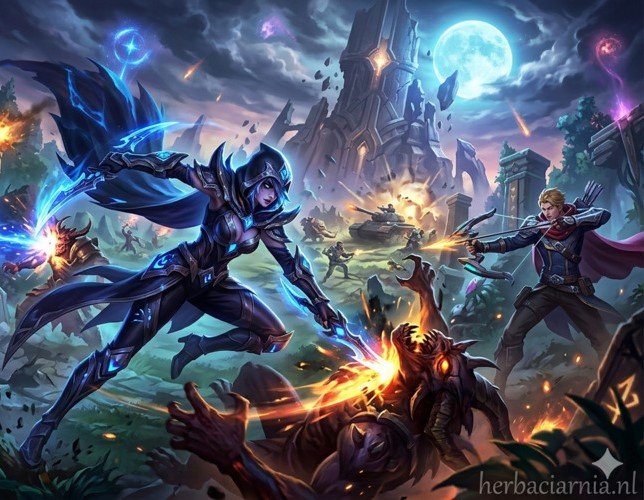
herbaciarnia.nl – Mobile Legends: Bang Bang thrives on the diversity of its heroes and how each one reshapes the battlefield in different ways. Every match feels unique because the hero compositions change, and each pick introduces new win conditions, weaknesses, and strategic possibilities. Understanding heroes is not just about knowing what they do—it is about understanding how they influence tempo, space, and decision-making across the entire match.
To truly improve, players must look beyond surface-level mechanics and instead focus on identity, timing, and adaptation. This guide breaks down heroes in a structured way that reflects real gameplay flow, from early laning to late-game execution and drafting strategy.
Hero Archetypes and Strategic Identity in Mobile Legends
Every hero in Mobile Legends carries a strategic identity that determines how they function in a team. These identities are shaped by damage type, mobility, durability, and scaling patterns. Recognizing these archetypes helps players understand not only their own hero but also how to counter or synergize with others.
Frontline heroes are designed to control space and absorb pressure so their team can function freely behind them. Heroes like Tigreal and similar tank-style characters are not defined by damage output but by their ability to dictate engagement. They decide when fights begin, where they happen, and how long enemies are forced to commit.
In real gameplay, frontline heroes act as walking boundaries. When a tank moves forward, the enemy team is forced to retreat or reposition. This psychological pressure is just as important as physical durability. A well-positioned tank can deny entire zones of the map without even using abilities.
Their responsibility also extends to vision control. Entering bushes first, checking objectives, and absorbing skill shots ensures that damage dealers can safely operate. Without a strong frontline, even the most powerful team composition collapses under pressure.
Burst Assassins and Execution Windows
Assassins rely on precision, timing, and rapid decision-making. Heroes such as Gusion represent this archetype perfectly, where success depends on identifying the exact moment to strike. Unlike frontline heroes, assassins avoid extended combat and instead focus on eliminating priority targets in seconds.
Their gameplay revolves around patience. Rather than engaging immediately, assassins wait for key abilities to be used, vision to be lost, or enemies to separate from their team. Once a vulnerability appears, they move in quickly, execute their combo, and retreat before retaliation becomes possible.
What makes assassin play challenging is the punishment for mistakes. A poorly timed engage often results in instant elimination, leaving the team without its primary damage threat. As a result, assassin players must constantly balance aggression with restraint.
Scaling Damage Dealers and Win Condition Heroes
Marksmen and mages represent the scaling core of most team compositions. Heroes like Miya embody the idea of late-game dominance, where early weakness transforms into overwhelming power once key items are completed.
These heroes require protection, space, and time. Their effectiveness increases as the match progresses, making early survival more important than early aggression. Every safe wave cleared and every objective secured contributes to their eventual power spike.
Their presence also defines win conditions. Teams built around scaling heroes must prioritize defense and map control early, then transition into structured team fights later. If protected properly, these heroes can completely reverse the outcome of a match in the late game.
Laning Phase Mastery and Hero-Specific Decision Making
The laning phase is where heroes begin to express their identity. It is not just about farming gold or experience but about setting the pace for the rest of the game. Strong laning creates momentum, while weak laning forces reactive play.
Lane control depends heavily on hero type. Some heroes excel at early aggression, while others must focus on safe farming. Understanding this difference is essential to avoiding unnecessary deaths and maximizing efficiency.
Early-game heroes aim to establish dominance through constant pressure. They zone enemies away from minions, force defensive positioning, and sometimes even coordinate early kills. In contrast, scaling heroes prioritize survival, ensuring they reach their power spikes without falling behind.
Control of the lane also affects map tempo. Winning a lane allows rotations into other areas of the map, influencing jungle fights and objective contests. Losing lane pressure, on the other hand, forces a team into defensive rotations, reducing their overall map presence.
Rotational Awareness and Map Movement
Once the first waves are cleared, heroes begin rotating to influence other parts of the map. This is where Mobile Legends becomes less about individual lanes and more about global positioning.
A well-timed rotation can decide early skirmishes around objectives like the Turtle. Heroes who rotate efficiently help their team secure numerical advantages, turning small fights into decisive victories. However, poor rotations often result in lost waves, missed gold, and wasted time.
Map awareness is crucial here. Players must constantly track enemy movements and anticipate where fights will happen next. Ignoring rotation opportunities often leads to passive gameplay, where the team slowly loses control of the map without realizing it.
Hero Matchups and Adaptation
Every lane matchup changes how a hero should be played. Some heroes dominate early but fall off later, while others struggle initially but become unstoppable as the match progresses. Understanding these matchups is essential for making correct decisions.
Adaptation is the key to surviving difficult matchups. Instead of forcing aggressive trades, players often need to adjust their playstyle, focus on farming safely, or rely on jungle assistance. Recognizing when to play aggressively and when to defend separates experienced players from beginners.
Even simple adjustments, such as changing positioning or timing skill usage differently, can completely shift the outcome of a lane. The best players constantly adapt rather than relying on fixed patterns.
As matches progress, Mobile Legends shifts into its most strategic phase. Team fights become more punishing, mistakes become more costly, and hero scaling determines victory more than early-game performance.
Late Game Team Fights and Positioning
Late game fights revolve around precision and positioning. One mistake can result in instant defeat because death timers are longer and objectives are more impactful.
Damage dealers must position carefully behind their frontline, while assassins look for isolated targets. Tanks initiate only when conditions are favorable, and supports focus on protection and crowd control. Every role has a narrow window of responsibility, and failing to execute it properly often leads to lost fights.
Heroes like Alucard become especially dangerous when properly farmed, as they can sustain through extended fights and punish mispositioned enemies. However, even strong heroes require proper timing and coordination to succeed in late-game scenarios.
Drafting Strategy and Team Composition Synergy
Drafting is one of the most overlooked aspects of Mobile Legends, yet it often determines the outcome before the match even begins. A strong draft balances damage, durability, crowd control, and mobility.
Synergy between heroes is more important than individual strength. A team with perfectly coordinated abilities will often outperform a team of stronger but disconnected heroes. Drafting also involves countering enemy picks, limiting their comfort heroes, and forcing them into unfavorable matchups.
Understanding draft structure allows players to anticipate how the match will unfold. A heavy scaling composition, for example, must avoid early fights, while aggressive compositions must end the game quickly before scaling becomes relevant.
Mental Resilience and Competitive Consistency
Beyond mechanics and strategy, mental strength plays a huge role in performance. Mobile Legends is a game of momentum, and emotional decisions often lead to mistakes. Staying calm during losing situations allows players to recover and find opportunities instead of forcing bad engagements.
Consistency comes from discipline. Players who maintain focus across all stages of the game perform more reliably than those who rely on emotional reactions. Even in losing matches, there are always opportunities to improve positioning, secure objectives, or delay enemy progress.
Competitive mindset also involves learning from every match. Instead of focusing only on victory, experienced players analyze mistakes, refine their decision-making, and improve gradually over time.
Conclusion Mastering Heroes in Mobile Legends: A Complete Guide to Roles, Strategy, and Game Impact
Heroes in Mobile Legends are not just selectable characters—they are strategic tools that define how each match unfolds. From frontline tanks controlling space to assassins executing precise eliminations and scaling heroes shaping late-game outcomes, every role contributes to a larger system of teamwork and decision-making.
Mastery comes from understanding how these heroes interact with each other, how they evolve throughout the game, and how they respond to different situations. Players who learn to adapt their playstyle, coordinate with teammates, and maintain strong mental discipline consistently outperform those who rely on mechanics alone.
In the end, Mobile Legends is not just about picking strong heroes—it is about understanding how to use them in the right way at the right time.