
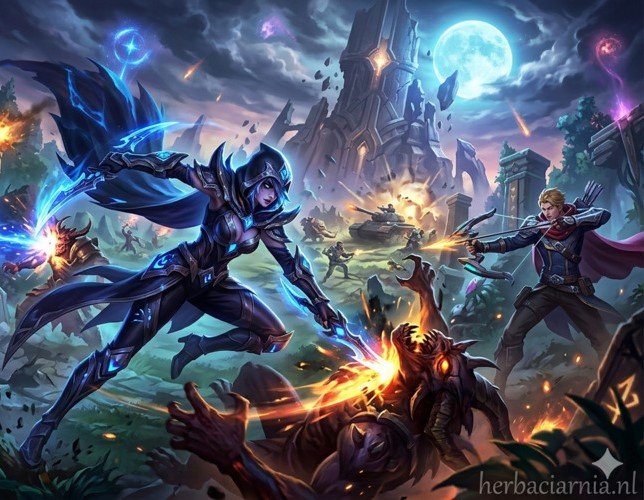
herbaciarnia.nl – Mobile Legends: Bang Bang offers an incredibly diverse roster of heroes, each possessing unique abilities, strengths, and strategic purposes. While many players focus on mechanics and flashy plays, true mastery comes from understanding how heroes function within a team and how they influence the overall flow of a match. Every hero has a role to fulfill, and even the strongest heroes can become ineffective if they are used without proper planning and coordination.
Victory in Mobile Legends is rarely decided by individual skill alone. Team synergy, objective control, and decision-making play equally important roles. A player who understands the deeper aspects of hero interactions will often outperform opponents who rely purely on mechanical execution. As the game progresses through different stages, heroes evolve in power and responsibilities, making adaptability one of the most valuable skills a player can develop.
Understanding Hero Playstyles and Their Unique Strengths
Each hero in Mobile Legends possesses a distinct playstyle that influences how they should be used. Learning these playstyles helps players maximize their effectiveness and contribute more consistently to their team.
Some heroes excel at creating pressure from the very beginning of the match. These aggressive heroes are designed to dominate lanes, secure early kills, and disrupt enemy farming patterns. Their strength lies in their ability to establish momentum before opponents have the opportunity to scale into stronger phases.
Heroes with powerful early-game abilities often force enemies into defensive positions. This creates opportunities for teammates to secure objectives and gain map control. However, aggressive heroes must be used wisely because overextending without proper vision can quickly turn an advantage into a disadvantage.
Playing aggressively requires strong awareness of enemy movements. Players must know when to push forward and when to retreat. Successful aggression is not about fighting constantly but about applying pressure intelligently and forcing opponents into difficult decisions.
Scaling Heroes and Late-Game Dominance
Unlike aggressive heroes, scaling heroes prioritize survival and farming during the early stages. Their true strength emerges later in the game when they acquire enough items and levels to unlock their full potential.
These heroes often become the primary damage dealers during late-game team fights. Their ability to deal consistent damage makes them essential win conditions for many team compositions. However, reaching that stage requires patience and discipline.
Scaling heroes depend heavily on positioning and support from teammates. Protecting these heroes becomes a shared responsibility because their survival often determines whether the team wins or loses crucial engagements. Players who enjoy long-term planning and calculated gameplay frequently gravitate toward these heroes.
Utility Heroes and Tactical Influence
Utility heroes contribute through healing, shielding, crowd control, or mobility support rather than raw damage. Although they may not always secure kills, their impact on the battlefield is enormous.
These heroes excel at creating opportunities for teammates while disrupting enemy plans. Their abilities often determine the outcome of team fights by providing sustain or controlling enemy movement. Utility heroes require excellent timing and awareness because their effectiveness depends on understanding the needs of the team.
A well-played utility hero can compensate for mistakes, extend fights, and provide the stability necessary for damage dealers to perform at their best. Their contribution may not always be visible on the scoreboard, but their influence is felt throughout the entire match.
Building Team Synergy and Coordinated Strategies
Individual hero strength is important, but Mobile Legends is fundamentally a team game. Understanding how heroes work together is essential for achieving consistent success.
A balanced team composition provides durability, damage, crowd control, and sustain. When these elements are present, teams are better equipped to handle various situations throughout the match.
Frontline heroes create space for fragile damage dealers, while supports enhance survivability and provide additional utility. Fighters bridge the gap between offense and defense, offering flexibility during skirmishes and large-scale engagements.
Poor team composition often results in weaknesses that opponents can exploit. For example, a team without a durable frontline may struggle to protect its marksman, while a team lacking crowd control may find it difficult to secure kills.
Understanding team composition helps players make smarter hero selections and increases overall synergy.
Communication and Rotational Awareness
Even strong heroes can become ineffective without proper coordination. Communication plays a crucial role in ensuring that teammates move together and respond to threats efficiently.
Rotations are particularly important during the mid game when objectives become increasingly valuable. Players who rotate effectively can create numerical advantages and secure important resources before opponents have time to react.
Awareness of ally positions also prevents unnecessary risks. Charging into battle without support often leads to unfavorable trades and wasted opportunities. Teams that maintain cohesion generally perform better than those relying solely on individual plays.
Good communication does not always require voice chat. Simple pings and map awareness are often enough to coordinate movements and maintain pressure across the map.
Objective Control Over Kill Hunting
Many inexperienced players focus excessively on securing kills, forgetting that objectives ultimately determine victory. Towers, Turtle, and Lord provide long-term advantages that outweigh temporary kill leads.
Heroes should always prioritize objectives whenever possible. Winning a fight becomes meaningful only if it translates into map control or structural damage. Chasing kills without securing objectives frequently allows opponents to recover and regain momentum.
Teams that emphasize objectives develop more consistent strategies and avoid unnecessary risks. This disciplined approach often proves more effective than reckless aggression.
As matches progress, team fights become increasingly important. Understanding how to approach these engagements separates average players from advanced competitors.
Positioning and Survival During Team Fights
Positioning is one of the most critical aspects of successful team fighting. Damage dealers must remain safe while maintaining their ability to attack, whereas tanks and fighters need to create space and absorb pressure.
Improper positioning frequently leads to instant elimination, especially during the late game when damage output is extremely high. Players who constantly monitor enemy threats and adjust their positions accordingly become much more difficult to defeat.
Positioning also involves understanding terrain and using obstacles effectively. Bushes, walls, and narrow pathways can influence the outcome of engagements by creating favorable conditions for certain heroes.
Mastering positioning requires experience and constant adaptation to changing circumstances.
Timing and Patience in Engagements
Not every fight should begin immediately. Sometimes waiting for enemy abilities to be used or allowing teammates to arrive creates much better opportunities.
Patience is often more valuable than aggression. Skilled players recognize the importance of timing and avoid rushing into unfavorable situations. They understand that a delayed engagement can produce significantly better results.
Successful team fights depend on coordination and timing rather than raw mechanical skill. Players who remain calm and evaluate situations carefully are more likely to make effective decisions.
Knowing when not to fight is just as important as knowing when to engage.
Adapting to Enemy Strategies
No strategy remains effective forever. Opponents constantly adjust their tactics, forcing players to adapt in response. This dynamic nature is one of the reasons Mobile Legends remains engaging and competitive.
Adaptation involves modifying item builds, changing positioning, and altering priorities according to enemy behavior. Players who stubbornly follow predetermined strategies often struggle against flexible opponents.
Understanding enemy strengths and weaknesses enables players to exploit opportunities and minimize risks. Adaptability transforms difficult situations into manageable challenges and allows heroes to remain relevant regardless of circumstances.
The ability to adapt is one of the defining traits of experienced players.
Conclusion Exploring Mobile Legends Heroes: Gameplay Styles, Team Synergy, and the Art of Winning Matches
Mobile Legends heroes are far more than individual characters with unique abilities. They represent different playstyles, strategic options, and methods of influencing the battlefield. Understanding these differences is essential for achieving consistent success and enjoying the depth that the game offers.
From aggressive heroes that dominate the early game to scaling heroes that become unstoppable later, every playstyle has strengths and weaknesses. Building strong team synergy, prioritizing objectives, and mastering team fights all contribute to overall performance.
Ultimately, the path to mastery lies in understanding not only how to play a hero but also how that hero interacts with teammates, objectives, and changing game conditions. Players who embrace teamwork, maintain flexibility, and continuously refine their decision-making will discover that Mobile Legends is much more than a game of mechanics—it is a game of strategy, adaptation, and cooperation that rewards intelligence just as much as skill.