
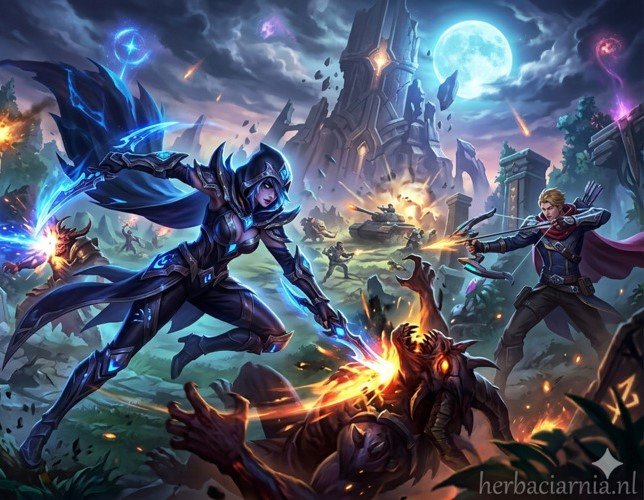
herbaciarnia.nl – Winning in Mobile Legends: Bang Bang is not determined only by mechanical skill, individual performance, or the number of eliminations a team secures. A team can dominate the early game and still struggle to finish the match because its damage composition allows opponents to build effective defensive items. When most damage comes from physical attacks, enemies can invest heavily in physical defense and reduce the effectiveness of several allied heroes simultaneously. The same problem can occur when a team relies almost entirely on magic damage. Even if every player performs well, the enemy may eventually reach a point where surviving teamfights becomes much easier than expected.
Understanding damage composition gives players another way to evaluate drafts, choose heroes, and prepare for different stages of a match. Instead of selecting heroes independently, players should consider how their damage sources complement one another and how the opposing team might respond. A balanced composition does not necessarily require an equal number of physical and magic damage dealers. What matters is whether the team has enough flexibility to threaten different opponents without sacrificing its ability to control objectives, protect important teammates, or initiate favorable fights.
Damage composition also affects how enemies make defensive decisions. If opponents cannot predict which defensive statistics they should prioritize, they may struggle to protect every member of their team efficiently. This creates opportunities for coordinated attacks, better target selection, and more effective item choices. By understanding the relationship between hero selection, defensive investments, and damage distribution, players can build a team that remains dangerous throughout the match rather than becoming predictable after the first few minutes.
Understanding Damage Distribution Before the Match Begins
Physical damage and magic damage create different strategic problems for the opposing team. Physical damage is commonly associated with marksmen, many assassins, several fighters, and some tanks or support heroes through their abilities. Magic damage is frequently provided by mages and certain assassins, fighters, and support heroes. However, a hero’s role does not always reveal the complete nature of their damage, because individual abilities and passive effects can behave differently from ordinary attacks. Players should therefore understand the actual damage profile of their chosen heroes instead of assuming that every hero belonging to the same role contributes identical damage.
A composition that depends heavily on physical damage may appear powerful during the opening stages. A marksman can build attack speed, a fighter can win trades, and an assassin can eliminate vulnerable opponents before they have enough defensive equipment. Nevertheless, the situation becomes more complicated when enemies begin purchasing physical defense. The opposing tank may become difficult to eliminate, while the enemy marksman or mage gains enough protection to survive an initial attack. Even when allied heroes continue dealing respectable damage, their effectiveness can decline because the enemy has prepared for the team’s most predictable threat.
Magic damage can create a similar problem when it becomes the only reliable source of meaningful damage. Opponents who recognize this pattern may purchase magic defense early, reducing the impact of repeated spells and making certain engagements less rewarding. A mage might still provide crowd control, area denial, or wave-clearing value, but the team’s overall ability to finish durable targets can become limited. This is particularly dangerous when the enemy composition includes several heroes capable of surviving initial burst damage and returning pressure over an extended fight.
The solution is not to force every draft into a rigid formula. A team does not automatically become stronger simply because it has three physical damage dealers and two magic damage dealers, nor does a perfectly divided composition guarantee victory. Players should instead evaluate the reliability of each damage source, the conditions required for that damage to be effective, and the defensive options available to opponents. A team with mixed damage is valuable because it can create different kinds of threats, but those threats must remain practical during real engagements. If the magic damage dealer cannot survive long enough to cast important abilities, or the physical damage dealer cannot attack safely, theoretical balance offers little benefit. The strongest composition combines complementary damage sources with dependable initiation, sufficient durability, and a realistic plan for reaching priority targets.
Identifying the Difference Between Hero Roles and Damage Profiles
Hero roles provide a useful starting point during drafting, but they should not replace a closer examination of individual abilities. A fighter may deal substantial physical damage through repeated attacks, while another fighter may rely more heavily on abilities that contribute magic damage. Some assassins combine physical attacks with effects that change their damage profile, and certain marksmen have abilities or passive mechanics that make their damage more complicated than ordinary basic attacks. Understanding these differences allows players to recognize which heroes can diversify a composition and which ones reinforce a damage pattern that already dominates the team.
The same principle applies when evaluating the opposing draft. If an enemy team selects several heroes that primarily deal physical damage, players should consider how much protection those heroes might need against magic damage. However, they should also inspect the enemy’s practical strengths. A composition with multiple physical damage dealers may compensate for its predictable damage profile through exceptional mobility, strong crowd control, or overwhelming early pressure. Countering the damage type alone will not solve every problem if the enemy can repeatedly engage before the allied team establishes its formation.
Players should also consider whether their damage sources operate at different ranges and timings. A long-range mage might weaken opponents before a fighter enters the battle, while a marksman can deliver consistent damage after the enemy’s main initiation abilities have been used. An assassin may provide the finishing threat against a vulnerable backline target. These heroes contribute more than separate damage numbers because their attack patterns can complement one another. If the enemy builds heavily against one source, the other sources may still create meaningful pressure.
During hero selection, ask whether the team has at least one reliable way to threaten durable opponents and another way to punish vulnerable targets. Consider whether the composition can continue dealing damage when its primary carry is controlled or forced to retreat. It is also useful to evaluate whether the chosen heroes can perform their roles without demanding the same resources or occupying identical positions during every fight. A balanced damage profile becomes much more effective when each hero has a clear responsibility. Instead of selecting heroes merely because they are individually powerful, players should build a composition in which every pick improves the team’s ability to create and sustain offensive pressure.
Recognizing Defensive Patterns in the Enemy Draft
The opposing draft can reveal how its players are likely to approach defense. Several durable physical-oriented heroes may indicate that the enemy expects to withstand physical attacks while controlling space around important objectives. A composition with fragile but dangerous mages may instead depend on eliminating opponents before a prolonged fight develops. These patterns are not absolute predictions, but they provide useful clues about the defensive challenges that will appear as the match progresses.
Players should look beyond the number of heroes in each role and consider which opponents are most difficult to remove. A frontline hero may purchase defensive equipment to survive the initial engagement, while a marksman might invest in a defensive item to avoid being eliminated by an assassin. Those choices can change the order in which threats should be addressed. If the enemy frontline is heavily protected against physical damage, repeatedly attacking it with the same damage source may waste valuable time. It may be more effective to pressure the backline, force the frontline away from its teammates, or use magic damage to create a different threat.
It is equally important to avoid overreacting to the first defensive purchase. One magic defense item does not make an enemy completely resistant to magical attacks, just as one physical defense item does not eliminate the threat of every physical hero. The effectiveness of defenses depends on their statistics, unique effects, hero abilities, levels, and the amount of damage involved. Players should evaluate the complete situation rather than treating any single item as an automatic counter.
During the early game, observe which enemy heroes are surviving unexpectedly long and which targets are being eliminated quickly. As the match continues, check whether opponents are changing their defensive investments in response to allied purchases. This information can help the team decide whether to maintain its original plan or redirect resources toward a different threat. The purpose of reading defensive patterns is not to predict every item choice perfectly. It is to avoid repeatedly making the same ineffective attack when the enemy has already demonstrated that its current defenses can withstand it.
Turning Damage Balance Into an Advantage During the Match
Equipment decisions should reflect both the hero’s responsibilities and the opponents’ actual defensive choices. Physical damage dealers may need penetration to remain effective against enemies who invest in physical defense, while magic damage dealers can consider suitable magic penetration when opponents begin building magic resistance. The correct choice depends on the available equipment, the hero’s scaling, the target’s defenses, and the stage of the match. Players should avoid assuming that one penetration item is always the best purchase simply because an enemy has become difficult to damage.
Timing matters as much as the equipment itself. Purchasing a highly specialized offensive item too early may delay an important core item that provides the hero with essential damage or utility. On the other hand, postponing penetration for too long can make later fights unnecessarily difficult when the enemy frontline has already accumulated substantial defenses. The objective is to recognize when the value of a new purchase outweighs the benefits of continuing the original build.
Damage dealers should also distinguish between attacking durable frontline heroes and eliminating fragile backline targets. A marksman who needs sustained attacks against a tank may benefit from different equipment priorities than an assassin who is expected to eliminate an enemy mage quickly. A mage who provides area damage and crowd control may have different needs from one whose main responsibility is bursting down a single target. Equipment should support the way the hero actually contributes to the team, not merely imitate the build of another player using the same character.
Team coordination improves these decisions further. If allied damage dealers already provide sufficient pressure against a particular defensive profile, another player may gain more value by improving their ability to survive, control opponents, or reach a different target. Conversely, when the team repeatedly fails to damage a heavily protected enemy, one player may need to adjust their build to provide the missing offensive capability. Such decisions should be made with awareness of the entire composition rather than through isolated purchases.
Players should remember that damage calculations are only part of the equation. An item that theoretically increases damage will not deliver its full value if the hero cannot safely attack, repeatedly misses important abilities, or spends every fight retreating from danger. The best equipment choice is the one that supports effective damage delivery under the conditions the team actually faces. Reviewing enemy builds, understanding personal hero mechanics, and coordinating purchases can keep the team’s damage relevant without sacrificing the defensive tools needed to survive important engagements.
Coordinating Different Damage Sources in Teamfights
A mixed damage composition becomes especially dangerous when allied heroes attack with coordinated timing. Consider a fight near the Lord pit where the enemy frontline is positioned between its damage dealers and the objective. If the allied team begins attacking the tank without a clear plan, it may spend several abilities and basic attacks while the enemy backline remains protected. A more deliberate approach might involve a mage threatening the area with abilities, a tank or fighter controlling the entrance, and a marksman maintaining a safe position from which to attack the most accessible target. The objective is to create several simultaneous problems that the enemy cannot solve through one defensive response.
This does not mean every hero must attack a different opponent. In many situations, focusing the same target remains the safest and most effective option, especially when that target has already been controlled or separated from its teammates. The important distinction is between coordinated focus and predictable damage. Allied heroes should understand why a target is being attacked, which abilities are needed to secure the elimination, and what the team will do immediately afterward. Mixed damage provides flexibility, but successful execution still depends on communication, positioning, and timing.
The team should also avoid wasting all of its strongest abilities at the beginning of an engagement. If a mage uses every important spell on a frontline hero who can easily retreat, the enemy backline may become free to attack. Similarly, an assassin who dives too early can be controlled before the marksman or mage has created enough pressure to distract the opposing team. Better coordination often involves allowing one hero to establish pressure first, then committing additional damage when an enemy uses a defensive ability or moves into a vulnerable position.
Positioning determines whether these complementary roles can function together. The marksman needs room to deliver repeated attacks, the mage requires an appropriate angle for important spells, and the frontline must prevent enemies from freely reaching the backline. If every allied hero stands in the same narrow area, the enemy may be able to disrupt multiple damage sources with one well-placed ability. Maintaining useful spacing allows the team to preserve its offensive options while reducing the risk of being controlled as a group.
After an elimination, players should reassess the battlefield rather than continuing the same attack automatically. The enemy may have lost its primary damage dealer, making the remaining frontline less threatening, or it may still possess enough area damage to punish an immediate objective attempt. A successful fight should create a concrete advantage, such as securing Lord, taking a turret, controlling the enemy jungle, or forcing opponents to retreat. Coordinated damage is most valuable when the team converts it into progress that brings the match closer to victory.
Maintaining Offensive Flexibility From the Mid Game to the Late Game
The value of damage balance changes throughout a match. During the early game, levels, lane matchups, and access to core abilities may matter more than a fully developed defensive build. A team with a strong early-game mage and an aggressive physical damage dealer might be able to create a lead before opponents purchase enough protection to resist their attacks. At this stage, players should use their strengths to secure favorable trades, protect important jungle resources, and establish control around objectives rather than waiting passively for every hero to complete an ideal build.
As the mid game develops, defensive investments become more influential and teamfights begin involving more heroes at once. This is the point where damage composition should be evaluated carefully. If the enemy frontline has become difficult to eliminate, the team may need better penetration, stronger target selection, or a different way to approach fights. If the opposing backline has become vulnerable because its players invested heavily in offensive equipment, the team may instead benefit from coordinated pressure that reaches those targets before they can respond.
Late-game situations demand even greater discipline because mistakes can determine the result of the entire match. A team that has sufficient damage to defeat any opponent can still lose if its carries are caught before an objective fight, its frontline abandons the backline, or its damage dealers waste important abilities on targets that are not worth pursuing. At this stage, preserving the heroes who provide the most reliable damage can be more important than securing a low-value elimination. The team should enter important engagements with a clear understanding of its offensive options and the defensive threats that must be respected.
Players should periodically compare the intended team composition with what has actually happened in the match. Perhaps the mage is far behind and cannot provide the expected pressure, or the marksman has become the strongest source of damage because of an early lead. Perhaps the enemy has invested heavily in physical defense but left its backline vulnerable to magic damage. These developments should influence target selection, equipment purchases, and the way the team approaches objectives. A composition is not a fixed plan that must be followed regardless of circumstances.
The most effective teams remain flexible without becoming disorganized. They recognize their strongest damage sources, protect those sources when necessary, and adjust their approach when opponents change their defenses. They also understand that damage balance does not eliminate the need for wave management, vision, objective control, and careful engagement decisions. Instead, it gives those fundamental skills a stronger offensive foundation. When players combine complementary damage sources with good positioning and disciplined decision-making, they can make their composition difficult to counter and maintain meaningful pressure even when the enemy adapts.
Conclusion Mobile Legends Damage Composition Mastery: Building a Team That Can Break Every Type of Defense
Building a successful Mobile Legends composition requires more than selecting heroes with impressive damage numbers. Players must understand how physical and magic damage interact with defensive equipment, how different heroes contribute to a fight, and how the opposing team may respond to their offensive strengths. A composition that relies entirely on one damage type can become predictable, especially when opponents recognize the pattern and invest in suitable defenses. By creating a team with complementary damage sources, players can make defensive decisions more difficult for the enemy and preserve several ways to threaten important targets throughout the match.
The process begins during drafting, when players evaluate hero abilities, team responsibilities, attack ranges, and the reliability of each damage source. It continues through equipment purchases, where penetration and other offensive options should be selected according to actual match conditions rather than copied without consideration. During teamfights, positioning and coordination determine whether those offensive tools can be used effectively. Even a theoretically balanced composition will struggle if its heroes attack without a shared plan, waste important abilities, or expose their primary damage dealers to unnecessary danger.
Flexibility is ultimately the most valuable lesson. Players should recognize when their original strategy remains effective and when the enemy’s defensive choices require a different approach. Sometimes the correct decision is to pressure the backline instead of repeatedly attacking the frontline. In other situations, focusing one controlled target is safer than spreading damage across the enemy team. The right response depends on the current battlefield, the condition of each hero, and the objectives that can realistically be secured after a fight.
By treating damage composition as a coordinated team responsibility rather than an individual statistic, players can improve their drafts, make more informed equipment decisions, and execute engagements with greater purpose. The goal is not to achieve a mathematically perfect balance between damage types, but to ensure that the team retains practical answers to different defensive situations. When every hero contributes a clear purpose and allied players adapt together, the composition becomes harder to predict, more difficult to defend against, and better prepared to turn temporary advantages into lasting control of the match.